
Yellowstone National Park

Mother Nature took her time when she went to work on Yellowstone, America’s most dramatic natural playground. Upper Geyser Basin contains at least 150 gushers, including Old Faithful, while the park’s canyon country is host to hundreds of hiking trails that lead to one grand overlook after the other, including inspiring Artist Point and the wonder called the Grand Canyon of the Yellowstone. Yellowstone’s myriad sights and activities are ideal for both thrill seekers and families (or thrill-seeking families).

A wolf by itself in the snow with snowy trees behind in Yellowstone National Park

Courtesy of Abercrombie & Kent

Overview

Spectacular Yellowstone

A visit to Yellowstone can be considered a success if it elicits romantic visions of backcountry expeditions in the spirit of Western legends like Jim Bridger and Teddy Roosevelt. By embracing Yellowstone, you’re opening yourself up to the essential American frontier experience, for which there is neither substitute nor rival. Yellowstone is home to continental America’s largest collection of mega-fauna, half of the planet’s geothermal hotspots, and nearly 2,000 species of plants, and Yellowstone Caldera is one of the world’s largest super volcanos, a snarling beast that never ceases to spew lava, rock, and steam onto the earth’s surface. Yellowstone is nothing short of America the Beautiful.

Best of Summer

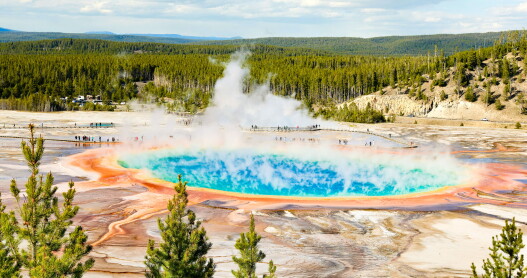
Experiencing the grandeur of Yellowstone on a leisurely summer walk is one of the park’s biggest draws. Major highlights, such as Grand Prismatic Spring, Old Faithful, and Yellowstone Falls are all a short stroll from the nearest parking lot, making this park family-friendly. Opportunities abound for more intrepid adventurers, too. Kayak Yellowstone Lake under the eyes of the mighty Absaroka Range, hike more than 1,100 miles of wild backcountry, test your endurance on a bicycle tour from Mammoth to the West Yellowstone entrance, or cast a fishing line into some of the most beautiful waters on earth.

Best of Winter

Yellowstone comes alive in the winter. The park is at its most primal under a blanket of snow; geyser basins steam, bison crash through the powder and ice on an unending search for sustenance, mountaintops shimmer under frosted caps, and thrilling adventure is all but guaranteed. Sleigh rides provide tremendous family fun, cross-country skiing opens up the desolate backcountry, snowmobile and snowcoach expeditions provide entry to the furthest recesses of the park, and a warm meal, a roaring fire, and good company wait for you inside a cozy snow lodge. Yellowstone receives more than three million visitors per year, but only 100,000 come during the winter, which means you’re likely to have a big chunk of the park to yourself.

Food and drink to try in Yellowstone National Park

No one comes to Yellowstone for the food, but that doesn’t mean you’ll be stuck solely with campfire grub. Much of what, where, and how you’ll eat in the park is determined by geography: you’ll often find yourself hours from the closest restaurant, though a few solid dining options are available. Lake Yellowstone Hotel is home to the best restaurant in the park, and serves local fare like elk chili, bison burgers, and fresh-caught trout. Stock up on snacks and water at the Old Faithful Lodge and Canyon Lodge dining rooms, or settle in for a hot meal at Mammoth Hot Springs Hotel or Roosevelt Lodge, both of which do rustic fare with an upmarket twist. The atmosphere at the Old Faithful Inn Restaurant is worth the price of the meal itself.

Practical Information

Warm summer months and long weekends draw the biggest crowds, while spring is the best time to spot wildlife. Although the park is hardest to access in winter, it can be the most rewarding time to go. Yellowstone has five entrances, four of which are closed to wheeled vehicles during winter months (early November to late April). The park is quite far from any major airport but a few hours’ drive from several small airports. Hotels, restaurants, gas, groceries, and souvenirs are all available inside the park. Some facilities and campgrounds are closed seasonally, and campsites in popular spots fill up quickly.
Guide Editor

READ BEFORE YOU GO
RESOURCES TO HELP PLAN YOUR TRIP
Located in the northwest corner of the park, just below the travertine terraces of the hot springs that gave the property its name, Mammoth Hot Springs Hotel has recently broken ground on the second phase of a two-part renovation that is updating the historic 1936 structure’s 97 guest rooms. The 118 basic-but-comfortable cabins are still available in the meantime. While some have en-suite bathrooms (a few enjoy an enclosed six-person hot tub), others require sharing lavatory and shower facilities. All guests have access to the hotel’s restaurant and grill—a good spot for sipping a huckleberry margarita at the end of the day—but most can be found observing the elk and bison that roam free on the grounds from their cabins’ small front porch. If you need a break from wildlife viewings, self-guided tours of old Fort Yellowstone, built for the Army cavalrymen who once protected the land and which today houses the park’s headquarters, are available.
No one stays at Old Faithful Inn for the amenities: With no Wi-Fi, air conditioning, or TVs in the rooms—some don’t even have private bathrooms—all you can do is watch bison graze unperturbed by the busloads of tourists pulling up, or the namesake geyser spout. The lack of luxury doesn’t seem to deter the crowds, though, who come to sleep under the roof of the original log-and-stone building, which was completed in 1904, and launched the iconic architectural style known as National Park Service rustic, or Parkitecture. Though an east wing was added in 1914, and a west wing in 1927, the lodge remains much as tourists saw it a century ago, with its soaring, open lobby surrounding an enormous four-sided, 86-foot stone fireplace. The pre-existing Crow’s Nest that leads to the roof terrace is off-limits now, but two mezzanine-level interior balconies are coveted seating areas for unwinding with nightly piano performances. While the two wings have better views of Old Faithful and the geyser basin, you can’t beat the Old House for its historic charm.
After a $90 million expansion that unveiled five new lodges and raised the facility’s total number of rooms to 590, Canyon Lodge & Cabins, in Canyon Village near the Grand Canyon of the Yellowstone River, has more accommodations than any other hotel in the park. The new LEED-certified structures were modularly built with sustainability in mind, incorporating countertops constructed of recycled glass and fly ash (a by-product of coal burning) and trim made with beetle-damaged wood from blue-colored pine bark, which would have otherwise gone to waste. The new lodges also feature two bedroom suites (king/queen) that include a sitting room with sofa bed; some have walk-out patios and decks. Budget-minded visitors who don’t want to sacrifice canyon views opt for the nearby cabins, which are modest yet comfortable. There’s also a $6 million refresh of the lodge’s food service on tap, with new cafés and restaurants offering updated menus and Mad Men–era Mission 66-inspired design.
If you plan to visit Yellowstone National Park in the summer—when grizzly bear sightings, hot spring treks, and Grand Teton Mountain vistas are at their peak—remember to reserve a room far in advance. With their guided tours and unparalleled access to nature, these lodges fill up fast.
Cyclists on the Parks, Peaks, and Prairies Trail will visit the plains of Wyoming, Devils Tower National Monument, the Black Hills, Mount Rushmore, the Badlands of South Dakota, and more.
See proof that the idea behind national parks—preserving spectacular landscapes—has been successful at the Grand Canyon of the Yellowstone. In 1871, William Henry Jackson took more than 100 photos with an 8x10 plate camera. (His photos were a large part of why Yellowstone was, in 1872, named the world’s first national park.) Jackson took several shots of various places in the 24-mile long Grand Canyon of the Yellowstone, including of the Upper and Lower Falls. In 2017, Jackson-based photojournalist Bradly J. Boner published the book, Yellowstone National Park: Through the Lens of Time, in which he rephotographed all but one of Jackson’s images. The book shows Boner’s modern-day photos side-by-side with Jackson’s. It turns out the Grand Canyon of the Yellowstone is very little changed.
With only a couple of exceptions, you can’t soak in Yellowstone’s thermal features (this is for numerous reasons, not the least of which is that most are so scalding hot they’d burn the flesh off you). North of Gardiner, Montana, though, in the no-stoplight community of Pray, Chico Hot Springs has welcomed soakers to its spring-fed hot pools since 1900. Spend the night in one of the quirky rooms in the historic main lodge, originally built as a boardinghouse for miners, or in a refurbished caboose from the Northern Pacific Railroad. If at all possible, plan to be at Chico on a Sunday morning, when it serves the best brunch in Montana.

When the Art family bought the struggling Chico Hot Springs Resort in 1972, some of the earliest improvements they made were to its dining room. The idea was to create one of the best restaurants in the state; if guests came for the food, maybe they’d spend the night. The family succeeded. Today the Chico Dining Room is so beloved it spawned a cookbook, A Montana Table: Recipes from Chico Hot Springs Resort. While ingredients are as fresh as can be—with produce from on-site greenhouses, meat from local ranchers, seafood flown in overnight from the coast—the menu includes some dishes that have been around for more than 40 years. The classic Chico meal is beef Wellington (service for two) and, for dessert, a Flaming Orange, which is exactly what it sounds like.
You can opt to sit back and relax on a 30-minute covered wagon ride to Roosevelt Lodge’s chuckwagon, or you can saddle up for a one- or two-hour horseback ride. However you choose to get to the lodge’s outdoor kitchen and campfire in Pleasant Valley’s sagebrush flats, a cooked-just-right steak, corn bread, baked beans, and fruit cobbler await you. The chuckwagon’s baked beans are rightly famous, and you’ll likely go back for seconds of the cobbler. After dinner, keep your eyes peeled for wildlife—Pleasant Valley isn’t quite as wildlife rich as neighboring Lamar Valley, but spotting bison, elk, or wolves isn’t unusual—while your ears enjoy traditional Western songs and cowboy poetry from a lodge wrangler.
A string quartet used to serenade diners here at the restaurant inside what is arguably the most famous inn in the entire National Park Service (and one of the largest log structures in the world). A pianist in the lobby has replaced the quartet, but most of the other details that make dining at Old Faithful a rustically elegant experience remain: the fireplace made from 500 tons of locally quarried rhyolite; hickory chairs and chandeliers; the soaring 76-foot-tall ceiling in the lobby; and Robert C. Reamer’s asymmetrical design, which purposefully mimics the chaos of nature. Breakfast and lunch are served buffet-style, with filling fare like corn bread, roast beef, and baked beans. Reservations are required for dinner, which can include offerings such as smoked trout ravioli or locally raised lamb.
The beauty, grandeur, and surprise of the national parks has influenced some of the world’s best art.