Philadelphia

The country’s sixth-largest city, Philadelphia has long been a travel destination for families and history buffs. But Philly, or that “overlooked middle child” between New York and Washington, D.C., has only recently found its place as an arts and culinary destination. Visitors will find world-class galleries and museums, and premium food fare ranging from artisan chocolates to world cuisines. The city’s friendly row house neighborhoods are interspersed with parks, squares, and welcoming outdoor spaces on both the Delaware and Schuylkill rivers. And as anyone who’s watched Rocky knows, Philly locals are a proud bunch with an underdog spirit and an “atty-tood.”

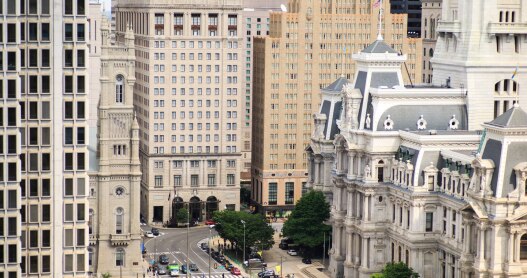
View of buildings in the Center City of Philadelphia, Pennsylvania.

Photo By Jon Bilous/Shutterstock

Overview

When’s the best time to go to Philadelphia?

Philly’s gorgeous parks and outdoor spaces are enjoyed year-round, though summer weather in the City of Brotherly Love can be oppressive during long stretches of humid days. Ideal times to visit are during spring and fall. Local parks and squares feature a multitude of flowering trees, providing lovely scenery in the spring and vivid colors in the peak of autumn. Winters in Philly are unpredictable and sometimes brutally cold. Those visiting in winter would be wise to choose a hotel in Center City to avoid transportation hassles in the event of a snowstorm.

How to get around Philadelphia

The Center City area is a 20-30 minute taxi ride from Philadelphia International Airport, depending on traffic. Taxis charge a required flat rate of $28.50 from the airport to central Philadelphia, which includes Center City and some outlying neighborhoods. The city’s public transportation system, SEPTA, operates a train line from the airport’s Terminal B with stops at several downtown stations.

While central Philadelphia is concentrated and easily walkable, those who plan to visit attractions in more remote neighborhoods can travel by SEPTA buses and regional rail lines. Bus fare is $2.50 and exact change is required. Tokens and day or weekly passes can be purchased at a discount. Taxis are easily available on downtown streets or at any hotel.

Can’t miss things to do in Philadelphia

There is no better introduction to the city’s outlying neighborhoods than a Mural Arts walking tour. Visitors get to see parts of the city that are truly off the beaten track while viewing an array of painted masterpieces gracing buildings all over Philadelphia.

Food and drink to try in Philadelphia

The Philadelphia restaurant scene is thriving and holds its own against any world-class city. Stand in Rittenhouse Square and you’re a stone’s throw from dozens of the city’s finest restaurants. For a top dining experience, choose one of the many restaurants of the city’s three culinary heroes—Jose Garces, Stephen Starr, and Marc Vetri. Philly’s Chinatown offers unlimited options for ethnic food. For a quick lunch or early dinner, the Reading Terminal Market provides endless choices—from standard local fare such as cheese steaks and hoagies to artisan grilled cheese and soul food.

Culture in Philadelphia

The keystone of Philadelphia’s thriving arts scene is the stately Philadelphia Museum of Art, recently bolstered by an annexed building across the street that enabled it to expand its already impressive exhibit space. Visitors should not miss the world renowned Barnes collection of priceless Impressionist paintings, recently transferred from the suburbs to stunning new digs on the Benjamin Franklin Parkway. But the jewel in Philly’s cultural crown is the city’s Mural Arts program, which has earned it the title of “Mural Capital of the World.” Visitors can take a trolley tour into various Philly neighborhoods to view buildings transformed by all manner of imaginative murals. Those interested in the local gallery scene should spend a day roaming 2nd and 3rd streets in Old City for an impressive array of original arts and crafts—two highlights of which are The Clay Studio and The Center for Art in Wood. Old City hosts a popular “First Friday” event, when the openings of new gallery shows are celebrated with wine and cheese.

The spring through fall seasons in Philly offer unlimited neighborhood street events like the 2nd Street Festival in Northern Liberties, the biannual Rittenhouse Square Fine Art Show, and gatherings of food trucks in Fairmount and other areas. Summer music festival highlights include July’s XPoNential Music Festival hosted just over the Delaware River in Camden by revered local public radio station WXPN, and the relatively new Made in America Festival on Labor Day weekend. Penn’s Landing on the Delaware River is host to frequent free events all summer long. And you won’t regret spending time strolling South 9th Street in mid-May, when the nation’s oldest outdoor market throws its annual Italian Market Festival.

Local travel tips for Philadelphia

Yes, Philly is a big city, but most of its historical and cultural attractions are located in Center City or along the Benjamin Franklin Parkway, an area that is eminently walkable. Finding parking in the city is difficult, making walking and public transit the less stressful alternatives. The Reading Terminal Market, a regular pit stop for grocery shopping or lunch, gets crowded during conventions and other large events nearby such as the annual Philadelphia Flower Show, so get to the market early. Locals wanting to stay tuned to the never-ending offerings of street festivals and events use the excellent website uwishunu, whose neighborhood and seasonal guides are invaluable.

Guide Editor

Sue Manuel is a self-taught artist and photography addict who is passionate about music, travel, and doughnuts. She is a regular visitor to New Orleans and her other favorite destinations include Hawaii, Latin America, Morocco, and New Zealand. When she is not exploring Philadelphia’s Fairmount Park by bike or with her dog Daisy, she is busy posting thousands of travel and Philly photos on various websites under the pseudonym lucymagoo.

READ BEFORE YOU GO
HOTELS
These hotel pools around the globe are worth building a trip around.
An immersive tale from The Notary Hotel, inspired by the curated experiences of Autograph Collection Hotels.
Autograph Collection Hotels bring their unique histories into the present—and make for immersive guest experiences.
RESOURCES TO HELP PLAN YOUR TRIP
Among the original guests to pop in at Dr. Thomas Bond’s 1769 Georgian home on South Second Street was none other than Benjamin Franklin. Together the duo chartered Pennsylvania Hospital, the first public hospital in America, and Bond was an influential figure in Philadelphia throughout the Revolutionary War into the first turbulent decades following the founding of the country. Today, the four-story red-brick home within Independence National Historical Park has been meticulously restored, offering history buffs a taste of Philadelphia at the dawn of America. Original architectural details restored to their full 18th-century splendor include the modillion cornice at the roofline, the parlor’s Rumford fireplace, and the grand staircase connecting the third and fourth floors that was subsequently copied in other prominent buildings around town, including the still-standing City Tavern.

Each guestroom has been furnished with Federalist-style reproductions, with a few antiques sprinkled around. Ten rooms offer queen beds, with the two original bedrooms nearest the first floor adding small sitting areas with working fireplaces.
Set within a century-old, Pantheon-inspired former bank building, the Ritz-Carlton, Philadelphia raises Center City living to classical heights. When the building opened in 1904, the Girard Trust marble dome was the largest in the country, and its columns and styling matched its inspiration down to its oculus 142 feet from the floor, the exact height as the Roman original. Today, every stay starts in this grandiose rotunda, where staff man the immaculately preserved bank-teller booths. Guest rooms and suites are in the attached 30-story office tower, gutted and transformed into a hotel by Ritz-Carlton.

All 299 rooms and suites bring classic Ritz-Carlton elegance, with wood furnishings matching gold, sage, and pumpkin hues. High ceilings and picture windows with stunning city views enhance the vibe, while spa-style marble bathrooms have rain showers.
The bustling corner of Walnut and 17th streets is anchored by the Latham, a stone-and-brick tower built in 1907 as luxury apartments for moneyed Philadelphians. While other Center City historic structures met their demise in the late 1960s, a group of investors doubled down on the stately building, transforming it into Philadelphia’s premier business hotel in 1970. The prestigious address completed a top-to-bottom renovation in 2011, bringing the Latham firmly into the 21st century while preserving period artifacts and style.

True to its apartment roots, arriving at the hotel is more like entering a tony doorman building, and the Latham’s residential roots bestow spacious guestrooms with tall ceilings, bay windows, and big bathrooms. Gold and gray hues are complemented by pops of blue, while big bathrooms keep it simple with a tub/shower combination.
The Morris family’s roots are among the deepest in colonial Pennsylvania. Anthony Morris settled here in 1685 and would become one of the city’s first mayors. A century later, his grandson Samuel served as a captain of the Continental Army’s Philadelphia City Calvary. Though the Morris family’s red-brick mansion on 8th street was built in 1787, it upholds a pre-Revolutionary colonial style epitomized in the stately Independence Hall, and members of the family would live in this large corner property for the next 120 years. A painstaking restoration in the mid-1960s earned it a spot as a National Historic Landmark, and the current owners renovated the property in 2000, transforming the distinguished address into a 17-room boutique hotel without compromising original architectural details. With a leafy courtyard garden, gourmet farm-to-table restaurant, and a focus on personalized service, the latest incarnation of this home lives up to its storied past.

Each room is tastefully decorated in Colonial-era decor and reproductions. Despite the history and limitations inherent in any historic structure, guestrooms are large and uncluttered with all the modern conveniences, splashes of natural light, and sparkling bathrooms, some with Jacuzzi tubs. Adding to the allure are a complimentary continental breakfast and a cocktail, beer, or glass of wine on the house.
An offshoot of the highly acclaimed restaurant Talulah’s Garden, this neighboring cafe and market offers a casual spot for eating in and gourmet foods and treats for taking out. Located directly on Washington Square park, the cafe serves wine and beer and premium La Colombe coffee. Talulah’s Daily is a comfortable place to enjoy healthy prepared foods and creative sandwiches, with many options for vegetarians. The gourmet shop offers a variety of unique non-perishable food treats that will survive your trip home.
The Silk City Diner, Lounge, & Beer Garden is a super fun nightspot in the Northern Liberties neighborhood that has a long history in Philadelphia. The diner car was built in 1952 by the Paterson Dining Company in Paterson, New Jersey. At the time, the city of Paterson was home to a thriving silk manufacturing industry and was nicknamed the “Silk City,” so the diner car came to be nicknamed a “Silk City Diner.” In 1954, the diner car was installed at its present location next to a cocktail lounge at 5th and Spring Garden streets. It has been serving up brunch, dinner, and live music ever since. The large, comfortable outdoor beer garden (courtyard) at Silk City, a more recent addition, is open from spring through fall and is regularly awarded the honor of best outdoor dining space in the city by Philadelphia Magazine. The diner menu features New American cuisine and dinner is served every night. Brunch is served Saturday and Sunday from 10 am to 3:45 pm.
The Manayunk neighborhood is a great place to spend the day, with charming Main Street shops, restaurants, and bars. Often overlooked by visitors is the scenic towpath along the canal, a wonderful spot for a leisurely walk or bike ride. The adventurous can bike to Manayunk from the Philadelphia Museum of Art via the Kelly Drive recreational path, and the super-adventurous can pass through Manayunk on their bikes on the way down the Schuylkill River Trail toward Valley Forge. Manayunk is host to several fun festivals during the year and is a lovely destination in the fall. Consider coming by in September for the Fall Streat Food Festival, which features over 50 artisan-food vendors.
Many places in Philadelphia have names derived from Native American words. Manayunk, Philly’s trendy riverfront neighborhood in the northwestern part of the city, literally means “where we go to drink”. Which is a good way to segue into this highlight... I’d recommend spending the day in Manayunk, especially in the warm weather months, when the outdoor cafes on Main Street are thriving and people watching is at its peak. But regardless of the season, the Manayunk Brewery is a worthwhile pit stop for great food and craft beer. Housed in an idyllic spot in a former textile mill along the Manayunk Canal, the restaurant offers both indoor and outdoor seating and some of the best craft beer in Philadelphia. The beer choices change with the seasons and can be purchased in cans or growlers to go. There is a diverse wine and cocktail menu for those who don’t drink beer. The brewery is currently expanding in order to increase its beer production; however, the restaurant will remain open.
One of Philadelphia’s outdoor treasures, Fairmount Park is one of the nation’s largest urban park systems. The park was originally founded in order to protect Philadelphia‘s drinking water supply. The tract of land at Lemon Hill was the first land purchased to create Fairmount Park in 1855. Lemon Hill refers to both the house pictured and the hill itself, situated on a spectacular site overlooking the Schuylkill River, with views of the Art Museum and the city’s skyline. The Lemon Hill mansion is one of several original park mansions still in existence. Each house has its own unique personality and history, and all are open to the public.
Philadelphia locals who love the outdoors are particularly fond of walking, jogging or biking the scenic 8.5-mile riverfront “Loop”. The Loop is what we call the recreational path that runs from near the Art Museum to the west side of the Schuylkill River on Martin Luther King Drive, then crosses the Falls Bridge in East Falls, and continues along Kelly Drive back to Boathouse Row, Lloyd Hall and the Art Museum. (Or it can be done in the reverse.) One of the best things about this route for cycling or jogging is that Martin Luther King Drive is closed to vehicular traffic from 6 am to 5 pm on Saturdays and Sundays from April through October. (A small portion of the road from Eakins Oval to Sweetbriar Drive re-opens to traffic at 12 noon.) Bike rentals are available from Wheel Fun at Lloyd Hall. The view of Boathouse Row above is just one of many scenic views from Martin Luther King, Jr. Drive (formerly known as West River Drive) on the west banks of the Schuylkill.