
New Delhi

Delhi showcases India’s unique ability to modernize at a rapid pace without casting aside its cultural, historical, and spiritual identity. The capital city is a vast metropolis, with eclectic neighborhoods that reflect different ethnicities, heritages, and mobility. New Delhi, the government district of Delhi, is the administrative heart of India and an embodiment of the zeitgest of this huge, diverse nation. Amid the modern skyscrapers, award-winning restaurants, garden parks, breweries, and vibrant markets, a series of proud monuments provide silent reminders of India’s legacy.

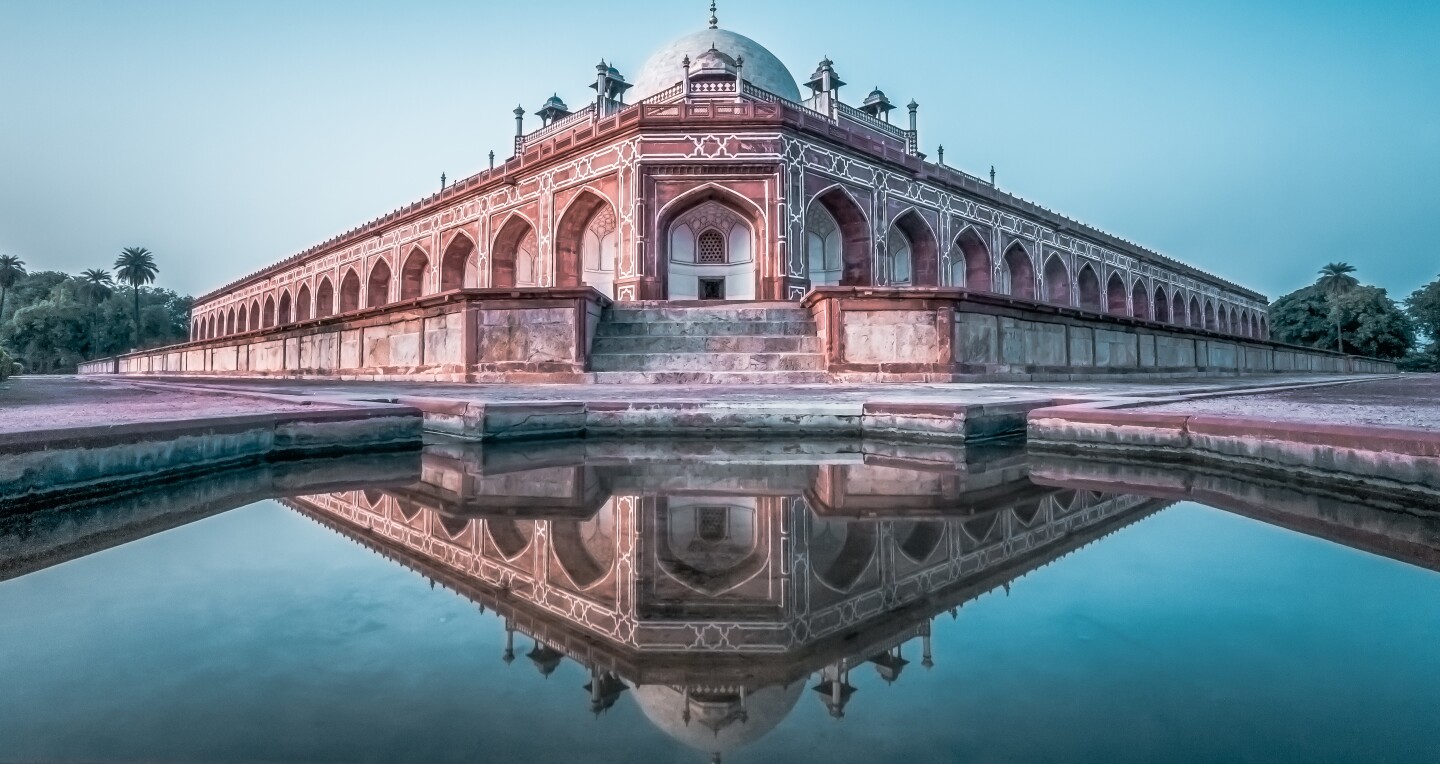
The last refuge of Mughal Emperor Humayun reminds rather of a luxurious palace, than a tomb. Located in the eastern part of Dehli, Humayun's tomb is one of the best preserved Mughal monuments.

Shutterstock

Overview

When’s the best time to go to New Delhi?

Delhi is best experienced between October and March: a time of moderate temperatures, little rain, and festivals galore. April through September can be hot and muggy, and the seasonal summer rains only complicate matters. Heavy fog in December and January can affect flight and train schedules, as well as early morning sight-seeing—so plan ahead.

How to get around New Delhi

The city center is approximately 45 minutes from the airport, and you can reserve a taxi or private vehicle after exiting baggage claim. The metro—which offers air conditioning and female-only compartments—is an affordable, reliable, and environmentally friendly option, but can also be congested with heavy crowds. Taxis are required by law to register as commercial vehicles, and they do have meters, although many drivers prefer to set a pre-paid flat rate. Surcharges will be applied for extra baggage, night rides, and tolls. Buses, usually run by the government, provide a cheap and convenient mode of public transportation. New features like air conditioning and low-floor lifts are being installed on city buses to improve the system and to draw private car owners away from busy roads. An auto-rickshaw, or tuk-tuk, is a three-wheeled motor vehicle for hire. Generally green, yellow, or black in color, auto-rickshaws have regulated, metered fares, and are common throughout the city. Private vehicles also povide a cheap, flexible, and comfortable option, but be sure to check that the car is licensed for tourists.

Can’t miss things to do in New Delhi

Old Delhi is a culinary, architectural, and historical adventure. Start at the Red Fort, a sandstone fortress that covers nearly 255 acres. Consider returning in the evening when the fort comes alive with a sound-and-light show that recreates 5,000 years of India’s history. Next, continue to Jama Masjid, the largest mosque in India, which was commissioned by Shah Jahan—the same emperor who built the iconic Taj Mahal. Step outside the gates and enter Chandni Chowk, which is touted as the oldest and busiest street market in Delhi. Chandni Chowk hosts an impressive mix of shops that specialize in goods such as silk, silver, crafts, spices, and leather products. Find renowned restaurants, food stands, and sweet shops—including the original Haldiram’s, Meghraj and Sons, Bikaner Sweet Shop, and Ghantewala Halwai. The street also houses several different religious shrines that illustrate a genuine cultural harmony: Sri Digambar Jain Lal Mandir and Bird Sanctuary, Gauri Shankar Hindu Temple, Sikh Gurdwara Sis Ganj Sahib, and Central Baptist Church. You’ll also find historic private residences nestled amid a labyrinth of small streets and neighborhoods around Chandni Chowk.

Food and drink to try in New Delhi

Delhi has a vibrant food scene including award-winning restaurants, roadside stands, and comfort food—lots of comfort food. Restaurants typically fall into two categories: veg (vegetarian) and non-veg. Remember that the cow is sacred in India, so beef is difficult to find. In the neighboring city of Gurgaon, permits are now issued for legal microbreweries, and creative new pubs are gaining popularity. India has also won numerous international accolades for beer, wine, and rum.

Culture in New Delhi

Delhi is such a multicultural society that each religious and ethnic demographic celebrates its own festivals. Diwali, the Festival of Lights, is celebrated in October/November with a profusion of lamps, fireworks, and anything that sparkles. Holi, the Festival of Colors, is a Hindu celebration at the end of the winter season. Bonfires are lit to signify a devotion to Lord Vishnu, the God of Preservation, and people gather to throw colored powder and water at each other. Many children make a game out of throwing powder on foreigners—even hiding in trees to sprinkle handfuls of red, green, blue, and gold powder on the heads of unsuspecting tourists.

Delhi is also home to an excellent collection of museums and cultural relics. The National Handicrafts and Handloom Museum displays tribal and rural art and artifacts. With over 35,000 pieces ranging from textiles to clay, the space is a welcoming community of artisans and art lovers. Each month, approximately 50 craftspeople from across the country are invited to reside on the property and demonstrate their talents. Don’t miss the Village Complex, an exhibition that displays village life from varying regions in India. Akshardham, located across the Yamuna River in Noida, is an elaborate Swaminarayan temple complex that features an IMAX theater, musical fountains, sunken gardens, and the Mandir: a temple with over 20,000 statues of India’s religious personalities. Be sure to experience the 12-minute boat ride that highlights over 10,000 years of India’s heritage, including inventions, discoveries, and the world’s first university, Takshashila.

Local travel tips for New Delhi

Distances are misleading in Delhi, so aim to group your activities by routes and time of day. A restaurant may only be a couple of miles away—but depending on traffic, the drive can take an hour or longer! The metro is a reliable and affordable way to reach neighboring cities like Gurgaon or Noida.
Guide Editor

READ BEFORE YOU GO
RESOURCES TO HELP PLAN YOUR TRIP
What began as an exhibit of Indian art in London in 1947 grew to become this New Delhi museum, now one of the largest in India. The pieces in the permanent collection (which stretches to some 200,000 items) span the globe—don’t miss the section on pre-Colombian art from the region that spans Central and South America—but the museum’s main focus is on representing thousands of years of Indian art and culture. The galleries showcase a wide array of topics, from coins, armor, and textiles to miniature painting, musical instruments, sacred texts, and tribal artifacts. Start at archaeology and work your way through.
The Laxminarayan Temple (also called the Birla Mandir) is an elaborate Hindu temple of red and white columns, artificial mountains, and waterfalls. The temple was inaugurated by Mahatma Gandhi with the condition that the site would be open to all castes and faiths. “Laxmi Narayan” refers to the Hindu God Vishnu, the Preserver, with his consort Lakshmi, the Goddess of Wealth and Prosperity. There are also three side-temples dedicated to Buddha, Shiva, and Krishna. The temple is illuminated during two important holidays: Diwali, the Festival of Lights, and Janmashtami, Krishna’s Birthday.
Delhi is brimming with temples, but the unique architecture of the Baha’i House of Worship blossoms above the rest. The temple resembles a lotus flower with 27 marble petals that shelter a central hall that can accommodate 2,500 worshipers. Many believe the land surrounding the site has an increased energy that raises self-awareness and vibrational frequency. Though not scientifically proven, I did feel a shift after spending 15 minutes of silence in the hall. The temple receives an average of 10,000 visitors each day, so be prepared to share the sacred experience. Note: Closed on Mondays.
One of the largest craft museums in India, the National Handicrafts and Handloom Museum displays tribal and rural art and artifacts. With over 35,000 pieces ranging from textiles to clay, the space is a welcoming community of artisans and art lovers. The museum was created over a 30-year period to preserve the sacred and traditional artistry of the region. Each month, approximately 50 craftspeople from across the country are invited to reside on the property and demonstrate their talents. Don’t miss the Village Complex, an exhibition that displays village life from varying regions in India. Note: Closed on Mondays.
Explore 10,000 years of India’s history, culture, architecture, and spirituality on over sixty acres of manicured grounds. Akshardham is an elaborate Swaminarayan temple complex that features an IMAX theater, musical fountains, sunken gardens, and the Mandir with over 20,000 statues of India’s religious personalities. The main shrine of the temple houses the statue of Lord Swaminarayan. Be sure to experience the 12-minute boat ride that highlights over 10,000 years of India’s heritage, including inventions, discoveries, and the world’s first university of Takshashila. The musical fountain echoes Vedic sentiments and prayers, and the Hall of Values features an audio animatronic show. Note: Akshardham is closed on Mondays.
The intimate, dimly-lit setting of Lodi – the Garden Restaurant provides the perfect place for a romantic rendezvous or a business dinner. There’s a beautiful outdoor deck that overlooks the lush Lodhi Gardens or you can opt for the cozy confines within. The food is absolutely something to rave about, bagging the award of one of the best restaurants in Delhi. You’ll find all the Mediterranean staples like hummus, tabouli, shish taouk, and shwarma, but their specialties are Pistou Soup and River Sole Steak Creole. It’s one of the very few places in Delhi that serve actual beef, so feast your senses on real steak. And the best of all is the dessert menu — it’s killer! There’s also live jazz bands for your entertainment, usually on the weekends, but call before you go to check. You’ll come in hungry and leave happy!
La Piazza is regarded as one of the finest Italian eateries in New Delhi. And rightly so. It’s been highly ranked by various local magazines year after year. Every bite of every dish oozes with freshness and is cooked to perfection. It’s one of the few restaurants where I found that they offered healthy substitutes such as whole wheat pasta. The ambiance is dimly-lit and romantic, mimicking somewhat of a sidewalk Italian cafe with cascading white pillars, stone tiles, and wooden louvres. Top off your experience with scrumptious desserts and crisp Italian wine…and VOILA, you’re in Italian heaven! As expected, the dress code is upscale and classy. They will refuse service, so dress up! To try: the wood-fired pizzas!
Aqua Lounge is a sophisticated/trendy hotspot located in the Park Hotel. When looking for an open-air, relaxing alternative to the crowded, bustling nightclubs, Aqua Lounge is the perfect solution, especially on a warm midsummer night. Sip on cocktails and gorge on Mediterranean/BBQ dishes on the elevated stools at the bar or in the cool white tents by the poolside. There is no entrance fee, but it’s best to make reservations because it fills up really quickly. You’ll find a really diverse crowd filled with locals, travelers, and expats. In a nutshell, Aqua is the sunbather’s heaven by daylight, and a classy diva’s playground by moonlight.
There are some bars that get lost in the crush, while others make a lasting impression. Headed straight into the latter, Aura, a luxury bar in the 5-star Claridges Hotel, specializes in a wide array of vodkas, with more than 60 different rare vodkas from around the world to choose from. It’s one of the oldest bars in Delhi, dating back to the time when the nightlife was exclusive to upscale hotels. The place isn’t very large, so it makes for a cozy atmosphere. If you’re a vodka aficionado, you won’t want to miss this place. And if you’re not, you may just want to go to see the impressive range of vodkas. Full-course meals is not the house specialty, so you can expect to only find appetizers and small snacks to accompany the coveted spirits. Call ahead for various events such as bartending lessons and vodka tastings.
Smokehouse Grill is a true novelty in the hospitality scene of Delhi. It’s an absolute treat for beef-starved tourists in India. It’s one of the very few places in Delhi that has started serving India’s holy animal on a plate. Aside from the tantalizing steak dishes, the vivacious ambience and live house music complete this lounge/bar. Prices are on the high end, but it’s well worth it when a night on the town is in order. The martinis and classic cocktails are made well, so do give those a try. There are two floors, but the top floor is generally reserved for VIP guests or private parties. Although there is no cover charge, do make reservations, or you might be waiting ages for a table! There is no set dance floor, but you’ll see plenty of youngsters groovin’ to the hottest house/lounge beats at the bar. It’s considered one of the swanky, upscale lounge bars of Delhi, so naturally you will find that the crowd consists of foreigners, expats, and a wealthy local crowd. It’s located right next to Kuki Bar in Greater Kailash II, in Masjid Moth.