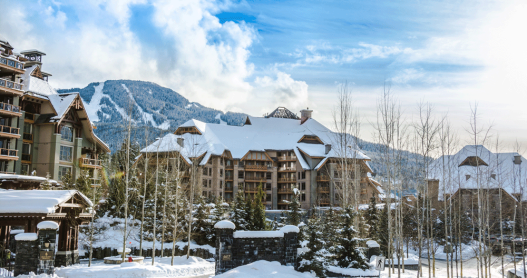
Whistler

Don’t dismiss Whistler as a sleepy ski resort town: The village’s two spectacular mountains make up the largest ski area in North America with more than 8,000 skiable (and hikeable) acres with over 200 named runs. And secondly, summertime visitors now outnumber winter guests, and the shoulder seasons are quickly catching up.

The resort was first developed to lure the 1968 Winter Olympics. The Winter Games didn’t arrive until 42 years later, but when they did, Whistler was changed significantly. One lasting benefit, the widening of the Sea to Sky Highway, has eased travel between the village and Vancouver. The Whistler Sliding Centre—built for the Olympics and still serving as a training site for athletes—now invites anyone along for a bobsled or skeleton ride.

Peak to Peak

Peak to Peak

© Mike Crain Tourism

Overview

Food and drink to try in Whistler

Whistler benefits from its proximity to Vancouver, one of North America’s premier restaurant towns. Many celebrity chefs, such as Bearfoot Bistro’s Melissa Craig, have moved to the village both for the greater culinary good and for the laid-back mountain lifestyle. Whistler teems with trendy tables: among them, Bar Oso’s tiny tapas bar, Alta Bistro with its unusual take on Canadian cuisine, and restaurants serving up brick-oven pizza, inspired sushi, and great pub fare. Terraces are popular in all weather here, providing the perfect setting for après-ski tall tales and leisurely meals on long summer nights.

Best of Summer

Every May, North America’s largest ski area transitions into the continent’s biggest downhill mountain bike park. Like its winter brethren, Whistler Bike Park features an ever-expanding map of trails—you can now “summit” on your two-wheeler—and arguably the best instructional school on the planet. Come summer, duffers are hardly left out in the cold, the three Whistler golf courses were designed by the likes of Nicklaus, Palmer, and Jones II, though the Pemberton track, Big Sky, remains the locals’ favorite. Active visitors and residents paddle the lakes and hike the mountain trails, and wander the village to check out the museums and shops. Feel a need for speed? Slip into the Whistler Sliding Centre year-round to drop down the Olympic bobsled course at 65 mph.

Culture in Whistler

The historic and living influence of First Nations people in the region is a source of pride and respect, as evidenced by several cultural sites of significance. The new Audain Art Museum together with the Squamish Lil’Wat Cultural Centre position Whistler among the most important art destinations in the Pacific Northwest. The Audain showcases an impressive array of Emily Carr paintings as well as one of the world’s largest aboriginal mask collections. The interactive Squamish Lil’Wat Cultural Centre is the first museum of its kind in North America: a joint venture between two nations. Outside of the institutions, village galleries showcase the thriving village arts scene of painting, sculpture, and crafts that often reflect the alpine setting, as well as authenticated First Nations artwork.

Events

Originally created to draw crowds and business to the village during the shoulder seasons, festivals like Cornucopia, GO Fest, the Whistler Film Festival, the Ski and Snowboard Festival, and CrankWorx now cut can’t-miss notches on many annual calendars. The Longtable Series, an August tradition started by the chef-owner of Araxi Restaurant, is a wildly popular ticket, with diners clamoring to take part in an alfresco dinner set among the windrows on Pemberton’s North Arm Farm.

How to get around Whistler

The village is car-free and access to most other activities can be navigated on foot, or by free shuttle. Visitors arriving via Vancouver can opt for a direct shuttle from the airport or choose to drive the 2.5-hour route along the Sea to Sky Highway. A floatplane flight from Vancouver to nearby Green Lake provides thrilling mountain views.

When’s the best time to go to Whistler?

Because of its proximity to the Pacific, winters here are mild, and daytime temperatures in the village rarely dip below 20F, even in January and February, the biggest snow “dump” months. Summers are spectacular, warm enough for a dip in Alta Lake, but cool enough at night to warrant a light sweater. Fall brings festival season and colorful foliage. (The weeks that follow spring skiing are the mud season, but the lack of crowds can make this the great time for a quiet visit.)

Guide Editor

READ BEFORE YOU GO
HOTELS
Whether it’s a staycation or a trip to a far destination, these hotels have activities to keep you (and your kids or travel buddies) busy during the winter season.
RESOURCES TO HELP PLAN YOUR TRIP
If you’re looking for accommodations that are more geared toward longer-term or family stays, check out Pan Pacific Mountainside. All 121 rooms include fully equipped kitchens—perfect for longer visits when you’ll need to cook the occasional meal for yourself. Suite sizes range from studios to two bedrooms, meaning there’s plenty of space to bring along the kids or travel in groups.
In the heart of Whistler Village, Sundial Boutique Hotel is about as central as you can get: Three gondolas to Whistler and Blackcomb mountains sit right outside your door, and the area’s restaurants, shopping, and nightlife are only steps away. With just 49 suites, it’s one of the smaller properties in town, but the rooms themselves are generously sized and include full kitchens, dining and sitting areas, and gas fireplaces. For those who don’t want to splurge on a suite with a private outdoor whirlpool, you’ll still have access to Whistler’s only rooftop hot tub. And while the property doesn’t have its own swimming pool, guests are free to use the one at the lodge next door from May through October.
Looking for a romantic break from the bustle of Whistler Village? You can do no better than Nita Lake Lodge, the area’s only lakeside resort. Located a five-minute walk to Whistler Mountain’s Creekside gondola and just under three miles from town, each of the lodge’s 77 rooms evokes a feeling of calm with dark wood, creamy linens, leather upholstery, and rock-faced fireplaces; all feature kitchenettes, two-person soaker tubs, and lake or mountain views. During warmer months, the lodge offers complimentary kayaks, canoes, paddeboards, and bikes for adventure seekers, while the plunge pool and hot tub are available year-round. Though the lodge provides free shuttle service every half-hour to the village, guests shouldn’t pass up a chance to dine on site at Aura, where many of the menu’s herbs and vegetables come from the restaurant’s own rooftop garden. Before dinner, try a seasonal craft cocktail on the patio at the resort’s Cure Lounge.
At the base of Blackcomb Mountain, Four Seasons Resort and Residences complements its sylvan surroundings with a kind of chalet-luxe style accentuated with natural materials. Public areas feature wood beams, granite, and limestone, and guest rooms in earthy tones include gas fireplaces and mountain views. Groups might prefer the private residences in the property’s adjoining condo; the largest has four bedrooms and a den, offering homey comforts plus the benefits of the facilities next door. The hotel curates experiences you won’t find anywhere else, including private dining in a cave in Canada’s largest ice field or customized ski tours with an Olympic athlete. Guests who want to embrace the healthy West Coast lifestyle can sign up for complimentary weekend fitness and yoga classes upon check-in.
Pizzeria Antico’s Italian decor couldn’t be more bella, from the distressed chairs to the white marble bar to the vintage road bicycle perched above the open cucina. Flatbread aficionados will find familiar fare such as the Margherita, funghi, and quattro formaggi along with house-made pastas like gnocchi di Antico. The gnocchi, made with Pemberton potatoes grown nearby and dressed simply in a garlicky tomato sauce, are absolutely sublime.
Walking through the first set of double doors offered warmth from the cold and snow outside. Walking through the second set, we were smacked in the face by the glorious smells coming from the wood fired ovens and the pizzas baking within.

Brewhouse brews 5 of their own beers and has a menu ranging from Matzo Ball Soup to 4 different types of Poutine.

Wait for a table upstairs or order off the full menu at the bar or by the fire in their cozy lounge.
The 34,400-square-foot Squamish Lil’wat Cultural Centre engages visitors on many levels. Socially, it is the first joint cultural project between two separate native nations in North America. The center is also a stunning architectural addition to the community. The design of the concrete, cedar, and fir structure melds the longhouse of the coastal Squamish people with the traditional Lil’wat pit house. Permanent displays of carvings, dugouts, and implements used by the coastal fishermen and hunters are supplemented by temporary exhibitions, including a presentation about Canada’s infamous residential schools. The SLCC also anchors one of Whistler’s most exciting new projects, the Cultural Connector—a path that links six local arts institutions—which is another indication of Whistler’s rising status as a fine arts destination.
Whistler Blackcomb doesn’t do anything small, so it was no surprise that Whistler Bike Park quickly emerged as the global go-to, lift-access, downhill-biking destination. The park even has its own massive festival, Crankworx, a 10-day rock-hopping frenzy every August. Walking among the armored throngs rolling their studded-tired bikes toward the lifts, you could forget that it snows here at all. Any thoughts of summer being the off-season have vanished. You don’t have to be a millennial—though it helps—to get dirty here; there are more than enough green and blue runs to provide a serious rush for youngsters and boomers. Sign up for the park’s outdoor clinics for critical insights into your technique.
Scandinave Spa, at the edge of the forest beside Lost Lake, is a Nordic–inspired spa that recommends alternating dips in the hot and cold pools, steam rooms, and brisk waterfall rinses. There are myriad ways to stitch together a rejuvenation regimen: Breathe deeply in the eucalyptus steam bath, then follow up with a series of hot baths before a shocking plunge under a chilly cascade, followed by a series of cold, colder, and almost freezing baths, or go the other direction. You can finish the treatments in around 90 minutes, but some choose to make a day out of a visit to Scandinave, tossing in a massage or facial, hanging out in the solarium to read or snooze, or even napping in one of the hammocks strung around the large property. The spa’s café, an open timber-paneled space with floor-to-ceiling windows, serves freshly prepared soups, sandwiches, salads, and smoothies.
The Peak 2 Peak Gondola that connects Whistler and Blackcomb mountains was considered a glitzy and expensive PR move when it opened in 2007. Today the 1.9-mile span, the longest unsupported span in the world, ferries hikers, bikers, and of course, skiers and snowboarders to the slopes they seek. Best of all, the Peak 2 Peak provides access to alpine wilderness usually reserved exclusively for the athletically inclined. (This is the adventure I take my 83-year-old mother on in Whistler, and she is blown away, as is her 8-year-old grandson.) Flying through the air, 1,431 feet up with hardly a support tower in sight, is a thrill. The 11-minute ride soars above snow walls, wildflower meadows, Fitzsimmons Creek, and several trails down, around, and behind the Whistler peaks.