
New Delhi

Delhi showcases India’s unique ability to modernize at a rapid pace without casting aside its cultural, historical, and spiritual identity. The capital city is a vast metropolis, with eclectic neighborhoods that reflect different ethnicities, heritages, and mobility. New Delhi, the government district of Delhi, is the administrative heart of India and an embodiment of the zeitgest of this huge, diverse nation. Amid the modern skyscrapers, award-winning restaurants, garden parks, breweries, and vibrant markets, a series of proud monuments provide silent reminders of India’s legacy.

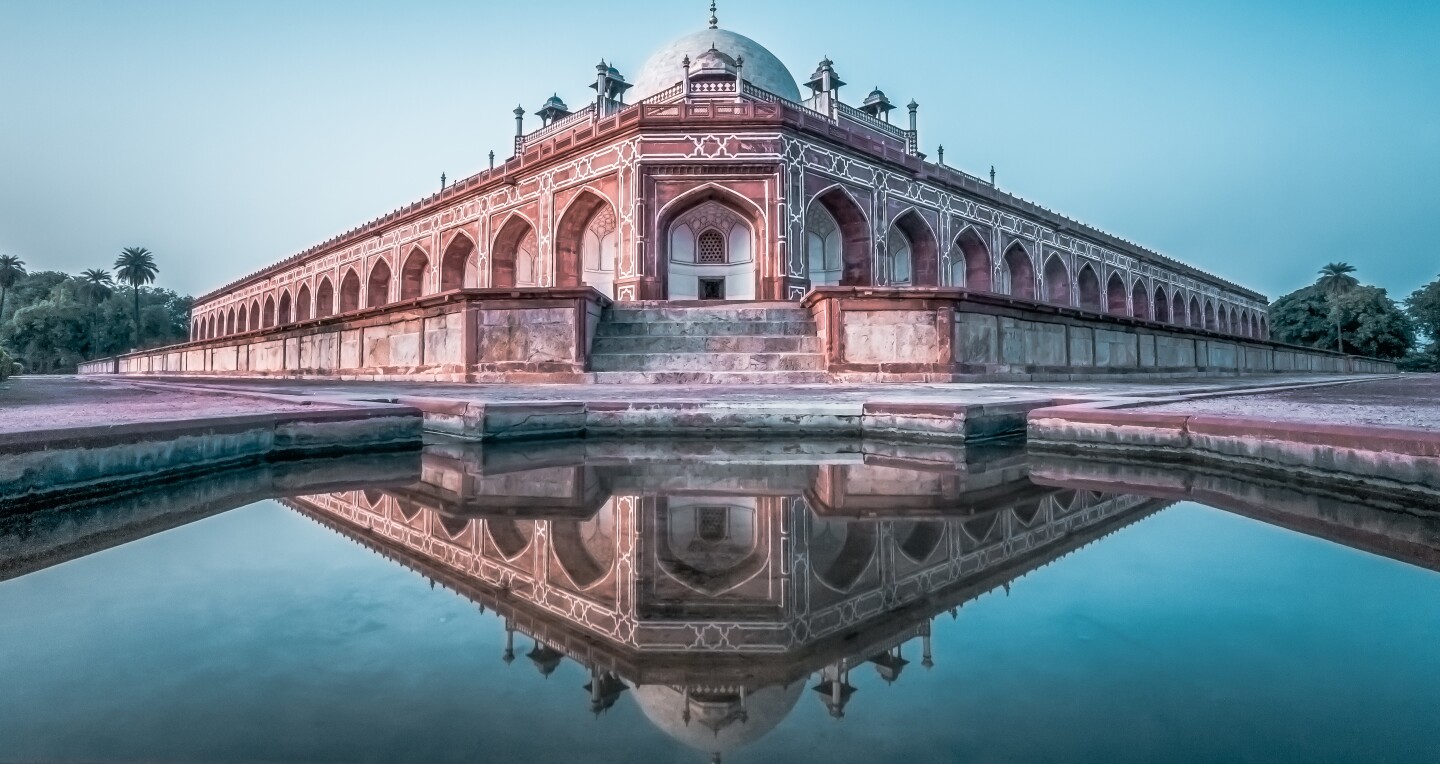
The last refuge of Mughal Emperor Humayun reminds rather of a luxurious palace, than a tomb. Located in the eastern part of Dehli, Humayun's tomb is one of the best preserved Mughal monuments.

Shutterstock

Overview

When’s the best time to go to New Delhi?

Delhi is best experienced between October and March: a time of moderate temperatures, little rain, and festivals galore. April through September can be hot and muggy, and the seasonal summer rains only complicate matters. Heavy fog in December and January can affect flight and train schedules, as well as early morning sight-seeing—so plan ahead.

How to get around New Delhi

The city center is approximately 45 minutes from the airport, and you can reserve a taxi or private vehicle after exiting baggage claim. The metro—which offers air conditioning and female-only compartments—is an affordable, reliable, and environmentally friendly option, but can also be congested with heavy crowds. Taxis are required by law to register as commercial vehicles, and they do have meters, although many drivers prefer to set a pre-paid flat rate. Surcharges will be applied for extra baggage, night rides, and tolls. Buses, usually run by the government, provide a cheap and convenient mode of public transportation. New features like air conditioning and low-floor lifts are being installed on city buses to improve the system and to draw private car owners away from busy roads. An auto-rickshaw, or tuk-tuk, is a three-wheeled motor vehicle for hire. Generally green, yellow, or black in color, auto-rickshaws have regulated, metered fares, and are common throughout the city. Private vehicles also povide a cheap, flexible, and comfortable option, but be sure to check that the car is licensed for tourists.

Can’t miss things to do in New Delhi

Old Delhi is a culinary, architectural, and historical adventure. Start at the Red Fort, a sandstone fortress that covers nearly 255 acres. Consider returning in the evening when the fort comes alive with a sound-and-light show that recreates 5,000 years of India’s history. Next, continue to Jama Masjid, the largest mosque in India, which was commissioned by Shah Jahan—the same emperor who built the iconic Taj Mahal. Step outside the gates and enter Chandni Chowk, which is touted as the oldest and busiest street market in Delhi. Chandni Chowk hosts an impressive mix of shops that specialize in goods such as silk, silver, crafts, spices, and leather products. Find renowned restaurants, food stands, and sweet shops—including the original Haldiram’s, Meghraj and Sons, Bikaner Sweet Shop, and Ghantewala Halwai. The street also houses several different religious shrines that illustrate a genuine cultural harmony: Sri Digambar Jain Lal Mandir and Bird Sanctuary, Gauri Shankar Hindu Temple, Sikh Gurdwara Sis Ganj Sahib, and Central Baptist Church. You’ll also find historic private residences nestled amid a labyrinth of small streets and neighborhoods around Chandni Chowk.

Food and drink to try in New Delhi

Delhi has a vibrant food scene including award-winning restaurants, roadside stands, and comfort food—lots of comfort food. Restaurants typically fall into two categories: veg (vegetarian) and non-veg. Remember that the cow is sacred in India, so beef is difficult to find. In the neighboring city of Gurgaon, permits are now issued for legal microbreweries, and creative new pubs are gaining popularity. India has also won numerous international accolades for beer, wine, and rum.

Culture in New Delhi

Delhi is such a multicultural society that each religious and ethnic demographic celebrates its own festivals. Diwali, the Festival of Lights, is celebrated in October/November with a profusion of lamps, fireworks, and anything that sparkles. Holi, the Festival of Colors, is a Hindu celebration at the end of the winter season. Bonfires are lit to signify a devotion to Lord Vishnu, the God of Preservation, and people gather to throw colored powder and water at each other. Many children make a game out of throwing powder on foreigners—even hiding in trees to sprinkle handfuls of red, green, blue, and gold powder on the heads of unsuspecting tourists.

Delhi is also home to an excellent collection of museums and cultural relics. The National Handicrafts and Handloom Museum displays tribal and rural art and artifacts. With over 35,000 pieces ranging from textiles to clay, the space is a welcoming community of artisans and art lovers. Each month, approximately 50 craftspeople from across the country are invited to reside on the property and demonstrate their talents. Don’t miss the Village Complex, an exhibition that displays village life from varying regions in India. Akshardham, located across the Yamuna River in Noida, is an elaborate Swaminarayan temple complex that features an IMAX theater, musical fountains, sunken gardens, and the Mandir: a temple with over 20,000 statues of India’s religious personalities. Be sure to experience the 12-minute boat ride that highlights over 10,000 years of India’s heritage, including inventions, discoveries, and the world’s first university, Takshashila.

Local travel tips for New Delhi

Distances are misleading in Delhi, so aim to group your activities by routes and time of day. A restaurant may only be a couple of miles away—but depending on traffic, the drive can take an hour or longer! The metro is a reliable and affordable way to reach neighboring cities like Gurgaon or Noida.
Guide Editor

READ BEFORE YOU GO
RESOURCES TO HELP PLAN YOUR TRIP
Along with stylish boutiques and design shops, the narrow lanes of the upscale Khan Market are lined with all manner of eateries, from cafés and cocktail bars to food stalls and fusions restaurants. As of late 2018, the roster also includes Sly Granny, which arrived on a wave of buzz generated from its original Bengaluru location. Through this often-packed bi-level outpost is smaller than the sprawling first location, the concept here is the same: a space “inherited” from a mythical globetrotting grandmother and inspired by her favorite recipes and eclectic style. Here, that translates to a décor of plush velvet sofas, old cookbooks, and crystal bric-a-brac, statement tableware, and bold, quirky artwork in the snug dining room, plus a cozy upstairs bar that converts to a cocktail lounge come dark. Drinks there range from the creative (crafted with ingredients like elderflower, yogurt, or honey-ginger syrup) to the classic (twists on G&Ts and Pimm’s cups), not unlike the style of the food menu below, which starts with pastas, steaks, and burgers, then veers towards tacos, schnitzel, chicken liver pâté, and Kerala-style fish moilee. You won’t need a granny’s encouragement to eat up dishes like bacon-gruyere mac-and-cheese balls, house-cured salmon, chocolate lava cake, and a twist on grilled cheese with ricotta, onion jam, tomato chutney, and two kinds of chilies.
This centrally located 40-suite hotel is part of an ultramodern stone-clad residential complex on Lodhi Road, the main axis of the government bungalow quarter laid in the 1940s by the team of Edwin Lutyens, urban planner of the British Raj. No longer managed by the Aman chain, which opened the property in 2013, the hotel has become a bargain given the huge size of the rooms and unusually luxurious amenities such as gender-segregated Turkish hammams and a Pilates reformer studio. Each room has a balcony and private plunge pool, good for cooling off after a jog to the nearby Lodhi Gardens or a round of tennis on the hotel’s private grass courts. Sprawling across seven acres, the hotel offers serenity in spades and service equal to that of the far more bustling Delhi palace–style hotels. A library with rare books on India and a cigar lounge enhance the clublike atmosphere. The architecture recalls a modern art museum, and indeed the hotel is filled with contemporary works on loan from the Apparao Gallery in Chennai.
Still known to locals as the Ambassador, the hotel is a listed heritage site built in 1945 by colonial architect Walter Sykes George in a fusion of British and Art Deco styles. But its purchase and refurbishment by the Taj Hotels group ensures its present-day comforts, namely pet-friendly rooms with high ceilings, reliable WiFi, and 24-hour room service. While the early clientele included Indian royals, today the building attracts business and leisure travelers looking for a terrific value for their money and a convenient launchpad from which to experience modern New Delhi—it’s next door to one of the city’s most upscale shopping malls. Shop till you drop, then return to the hotel for international favorites like burgers, pasta, and steaks, as well as Indian tandoori specialties at Yellow Brick Road restaurant.
New Delhi’s first modern business and luxury hotel, built in 1965, is a contemporary white box amid a sea of greenery. After a $100 million makeover overseen by starchitect Adam Tihany, The Oberoi now has 220 large rooms inspired by Sir Edwin Lutyens’s original plans for the city, with peacock-blue accents, spacious bathtubs, and super fast WiFi. Beloved restaurant threesixty˚ maintains its see-and-be-seen status thanks to its airier layout, and a new rooftop bar has become the go-to cocktail spot on warm-weather days. But the enthusiastic, attentive staff remains unchanged, earning adoration from repeat guests who appreciate the brand’s reliable and faultless service. Indoor and outdoor pools, a spa, proximity to a large golf course, and the convenient location just south of Delhi Gate make this hotel a great place to relax at the beginning or end of a countrywide tour.
New Delhi’s original power hotel, The Imperial opened in 1936 and played host to celebrities and historic figures: It was here, rather than at Connaught Place that Pandit Nehru, Mahatama Gandhi, Muhammad Ali Jinnah, and Lord Mountbatten met to discuss the partition of India and creation of Pakistan. Though renovation has lent a bit of a corporate vibe to the high-ceilinged hallways, the hotel still oozes nostalgia at every turn. A vast museum-worthy collection on display throughout public and private spaces includes life-size oil portraits of princely rulers, statuary, tapestries, old photographs, and British and Indian military and polo regalia. Rooms come in Victorian, Indian heritage, and Art Deco motifs, with marble floors, sumptuous velvet furnishings, and antique rugs. The centerpiece of the palm-studded lawn is a huge, beautifully tiled swimming pool where red-uniformed staff deliver ice-cold drinks to sunbathers in the stultifying heat, but if you prefer a moodier venue for your cocktails, the property has a library-like bar with wood-panelled walls as well as four atmospheric restaurants serving every kind of cuisine. And don’t miss the afternoon tea, enjoyed in the light-filled atrium.
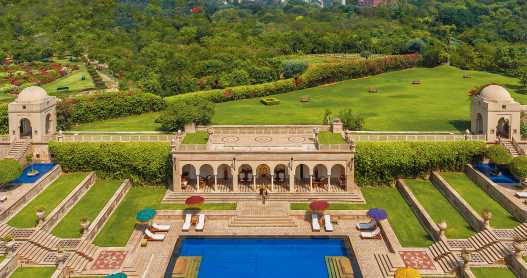
Designed by Thai architect Khun Lek Bunnag—who has garnered a reputation for building luxury resorts that highlight the natural beauty of southeast Asia (Four Seasons Resort Chiang Mai; Phulay Bay, a Ritz-Carlton Reserve)—the centerpiece of this peaceful boutique property is a 330-foot swimming pool that’s anchored by four massive gold-leaf columns and meanders through a forest-backed eight-acre garden. Vast domed and wood-covered rooms are controlled with iPads and express a fusion of modern Thai and Indian aesthetics—think sleek marble surfaces, whimsical panelled walls, and silk throw pillows. Guests are mostly couples and child-free travelers unfazed by the freestanding bathtubs that sit next to king-size beds and showers separated from sleeping areas by glass sliding doors. The many unfenced walkways over the swimming pool and other water features make the hotel unsuitable for very young children, though older kids might appreciate outdoor movie screenings.
If you are unable to make a trip to the residence of the Dalai Lama in Dharamshala, India, pay a visit to the Tibet House in Delhi. Also titled the Cultural Center of His Holiness the Dalai Lama, the Tibet House was founded in 1965 to preserve Tibetan principles and create a safe space for Buddhist teachings. There is a museum, gallery, and library housing valuable art, artifacts, manuscripts, and books. The five-story building is a modest yet sacred facility consistently brimming with activity. Check out the calendar for upcoming festivals, exhibits, conferences, and special events.
Talk about first impressions: Carved sandstone elephants welcome guests into a two-story chandeliered lobby at this palace-style hotel. Attentive service starts at check-in, with gifts of bindis and fresh jasmine necklaces. At 550-square-feet or larger, rooms are palatial themselves, and richly decorated with oriental carpets, jacquards, and hand-embroidered brocades. Those on higher floors offer panoramic city views, but many visitors choose spaces overlooking the internal courtyard or expansive garden (and away from a 16-lane highway) for a sense of calm. The hotel’s Edwardian-inspired bar draws locals and guests alike with its 25-page whiskey and scotch menu, as does a rooftop pool with stunning vistas over New Delhi’s urban landscape. Unique amenities include an on-call astrologer and, for women travelers, the option of an all-female service staff, including butler, gym instructors, and private city guides.
Ogaan both exhibits and sells the latest in Indian fashion. It is a showcase and retail space—a unique experience that pairs design and canvas. Some of the biggest names in Indian fashion have launched their collections at Ogaan. The 6,000 sq ft flagship boutique features clothing, jewelry and accessories.
Dosas, thalis, and tiffins! Saravana Bhavan specializes in South Indian cuisine. Each dosa comes with unlimited sambar and three chutneys - the tomato chutney being the house favorite. It is authentic, vegetarian, and very popular with the locals. Waits, especially on weekends, can be lengthy. Be sure and sample the Rava Masala Dosa, washed down with fresh lime juice.