New Delhi

Delhi showcases India’s unique ability to modernize at a rapid pace without casting aside its cultural, historical, and spiritual identity. The capital city is a vast metropolis, with eclectic neighborhoods that reflect different ethnicities, heritages, and mobility. New Delhi, the government district of Delhi, is the administrative heart of India and an embodiment of the zeitgest of this huge, diverse nation. Amid the modern skyscrapers, award-winning restaurants, garden parks, breweries, and vibrant markets, a series of proud monuments provide silent reminders of India’s legacy.

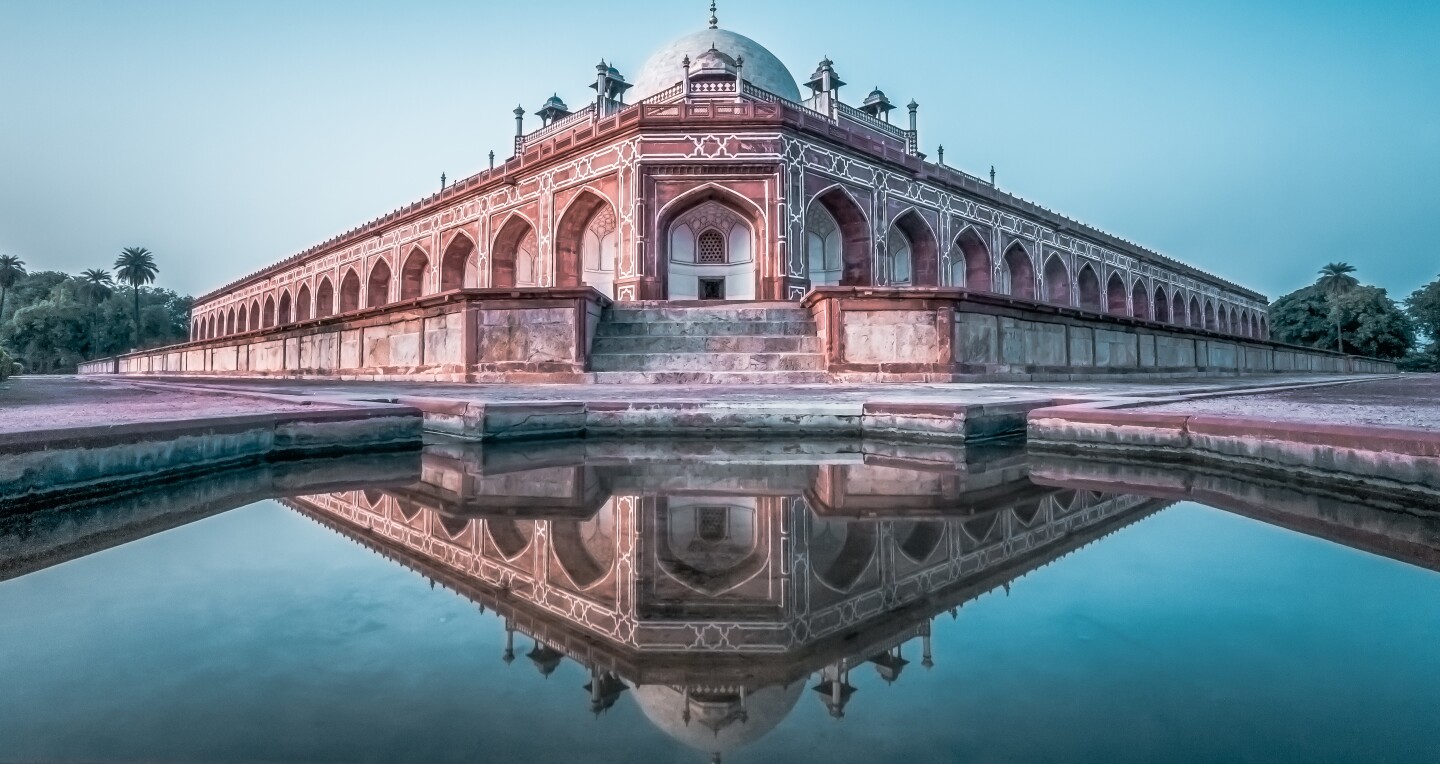
The last refuge of Mughal Emperor Humayun reminds rather of a luxurious palace, than a tomb. Located in the eastern part of Dehli, Humayun's tomb is one of the best preserved Mughal monuments.

Shutterstock

Overview

When’s the best time to go to New Delhi?

Delhi is best experienced between October and March: a time of moderate temperatures, little rain, and festivals galore. April through September can be hot and muggy, and the seasonal summer rains only complicate matters. Heavy fog in December and January can affect flight and train schedules, as well as early morning sight-seeing—so plan ahead.

How to get around New Delhi

The city center is approximately 45 minutes from the airport, and you can reserve a taxi or private vehicle after exiting baggage claim. The metro—which offers air conditioning and female-only compartments—is an affordable, reliable, and environmentally friendly option, but can also be congested with heavy crowds. Taxis are required by law to register as commercial vehicles, and they do have meters, although many drivers prefer to set a pre-paid flat rate. Surcharges will be applied for extra baggage, night rides, and tolls. Buses, usually run by the government, provide a cheap and convenient mode of public transportation. New features like air conditioning and low-floor lifts are being installed on city buses to improve the system and to draw private car owners away from busy roads. An auto-rickshaw, or tuk-tuk, is a three-wheeled motor vehicle for hire. Generally green, yellow, or black in color, auto-rickshaws have regulated, metered fares, and are common throughout the city. Private vehicles also povide a cheap, flexible, and comfortable option, but be sure to check that the car is licensed for tourists.

Can’t miss things to do in New Delhi

Old Delhi is a culinary, architectural, and historical adventure. Start at the Red Fort, a sandstone fortress that covers nearly 255 acres. Consider returning in the evening when the fort comes alive with a sound-and-light show that recreates 5,000 years of India’s history. Next, continue to Jama Masjid, the largest mosque in India, which was commissioned by Shah Jahan—the same emperor who built the iconic Taj Mahal. Step outside the gates and enter Chandni Chowk, which is touted as the oldest and busiest street market in Delhi. Chandni Chowk hosts an impressive mix of shops that specialize in goods such as silk, silver, crafts, spices, and leather products. Find renowned restaurants, food stands, and sweet shops—including the original Haldiram’s, Meghraj and Sons, Bikaner Sweet Shop, and Ghantewala Halwai. The street also houses several different religious shrines that illustrate a genuine cultural harmony: Sri Digambar Jain Lal Mandir and Bird Sanctuary, Gauri Shankar Hindu Temple, Sikh Gurdwara Sis Ganj Sahib, and Central Baptist Church. You’ll also find historic private residences nestled amid a labyrinth of small streets and neighborhoods around Chandni Chowk.

Food and drink to try in New Delhi

Delhi has a vibrant food scene including award-winning restaurants, roadside stands, and comfort food—lots of comfort food. Restaurants typically fall into two categories: veg (vegetarian) and non-veg. Remember that the cow is sacred in India, so beef is difficult to find. In the neighboring city of Gurgaon, permits are now issued for legal microbreweries, and creative new pubs are gaining popularity. India has also won numerous international accolades for beer, wine, and rum.

Culture in New Delhi

Delhi is such a multicultural society that each religious and ethnic demographic celebrates its own festivals. Diwali, the Festival of Lights, is celebrated in October/November with a profusion of lamps, fireworks, and anything that sparkles. Holi, the Festival of Colors, is a Hindu celebration at the end of the winter season. Bonfires are lit to signify a devotion to Lord Vishnu, the God of Preservation, and people gather to throw colored powder and water at each other. Many children make a game out of throwing powder on foreigners—even hiding in trees to sprinkle handfuls of red, green, blue, and gold powder on the heads of unsuspecting tourists.

Delhi is also home to an excellent collection of museums and cultural relics. The National Handicrafts and Handloom Museum displays tribal and rural art and artifacts. With over 35,000 pieces ranging from textiles to clay, the space is a welcoming community of artisans and art lovers. Each month, approximately 50 craftspeople from across the country are invited to reside on the property and demonstrate their talents. Don’t miss the Village Complex, an exhibition that displays village life from varying regions in India. Akshardham, located across the Yamuna River in Noida, is an elaborate Swaminarayan temple complex that features an IMAX theater, musical fountains, sunken gardens, and the Mandir: a temple with over 20,000 statues of India’s religious personalities. Be sure to experience the 12-minute boat ride that highlights over 10,000 years of India’s heritage, including inventions, discoveries, and the world’s first university, Takshashila.

Local travel tips for New Delhi

Distances are misleading in Delhi, so aim to group your activities by routes and time of day. A restaurant may only be a couple of miles away—but depending on traffic, the drive can take an hour or longer! The metro is a reliable and affordable way to reach neighboring cities like Gurgaon or Noida.

Guide Editor

READ BEFORE YOU GO
The history behind Delhi’s Nizamuddin Basti neighborhood.
HOTELS
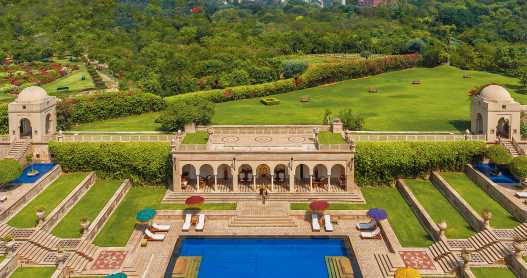
Oberoi Hotels and Resorts offers luxury and authenticity—and inspiring India travel itineraries that give back.
RESOURCES TO HELP PLAN YOUR TRIP
Dum Pukht is not just a meal. It is a royal experience. The restaurant has won numerous awards, including “Delhi’s Best Restaurant” and “Asia’s Golden Fork Award.” Indulge in traditional Indian dishes which are created with a special method involving cooking the food in heavy bottomed and sealed vessels to intensify flavors of the dish. Along with Bukhara, another of Delhi’s best, Dum Pukht is located in the ITC Maurya Hotel. Reservations are strongly recommended.
Let’s be honest. It’s so much fun to say the name of this restaurant. Inflections aside, Oh! Calcutta undeniably has the best Bengali food in Delhi. Oh! it’s delicious! Their specialty is seafood, but definitely try the Koraishutir Dhokar Dalna (lentil cakes) and papaya chutney. Oh! and be prepared to wait without a reservation.
The 50 best restaurants in the world, the top restaurants in Asia, the best restaurants in India—this elegant eatery has made all those award lists and more, often for several years in a row. Helmed by chef Manish Mehotra—himself a perennial “best chef” winner and MasterChef India judge—Indian Accent first opened at The Manor in 2009, where it quickly garnered acclaim for its modern take on subcontinental cuisine. It moved to The Lodhi hotel in 2017, where—in a striking, contemporary space lined with windows, paneled with mother-of-pearl, and centered around a “floating” glass-box private dining space—the high-quality and creativity has continued to soar. Some dishes skew “new Indian,” while others are more global with an Indian twist; either way, plates are colorful, flavorful, and artfully presented. Don’t miss signature dishes like galautis (kebabs) stuffed with fois gras, pulled pork tacos, butter popcorn upma, and duck khurchan served in a cone and topped with yogurt and chili. Get your carbs on with one of the nine types of bread—some layered with potatoes or Camembert—and wash it down with a “chat” sangria or masala-infused martini. While there are now Indian Accent outposts in New York and London, the Delhi location remains a must-visit—and, as of 2018, is still the one of the only restaurants in India to make all those award lists.
Ghantewala Halwai is an icon not only in Delhi, but all over India. Established in 1790, it is considered one of the oldest sweet shops in the country. Ghantewala has served Mughal Emperors, dignitaries, and of course the locals and tourists who scramble to sample the Pista Barfi. The Sohan Halwa, or traditional Persian sweet, is so good that folklore claims it stopped impending battles in the capital. Make sweets, not war.
Imagine a scene from Scott F. Fitzgerald’s Great Gatsby where a live jazz band serenades guests as they subliminally move to the rhythm of the music, with hors d’oeuvres in one hand and a vodka martini in the other. Expect a mirrored image of the same vibrant energy and posh ambience of Gatsby’s soirees aboard the Orient Express. Orient Express, the most expensive restaurant in Delhi and voted one the world’s best restaurants, offers a world-class dining experience alongside live jazz bands and fresh food flown in daily from France. The luxurious culinary journey begins in private booths on faux carriages that beautifully mimic the legendary train. The crisp menu offers cuisines of all countries through which the Orient Express traversed, with the classic French fare remaining triumphant. Revel in the seven-course meal, with an appetizer to whet your appetite and the signature dessert to perfect the extravaganza, and of course, succulent sorbet bites in between dishes to neutralize your overwhelmed, yet gratified palate. The individual carriages of the Orient Express are illuminated by gleaming brass fittings, polished wood paneling, and steel facades which not only mesmerize, but promise to fiercely invigorate your senses.
24/7 is fine dining in the exclusive LaLiT Hotel near Connaught Place. It is also the only space in the city where you can order drinks at any time of day or night - hence the name 24/7. A buffet is offered during breakfast, lunch and dinner, with a-la-carte options served the remainder of the day. Cocktails served anytime, including during Sunday brunch.
Global celebrities like Bill and Hillary Clinton and Bruce Springsteen have all been spotted at Bukhara. Ranked as one of New Delhi’s top (and priciest) restaurants since 1977, the legendary spot—now located at the ITC Maurya hotel—celebrates India’s rugged North West Frontier region in both its décor and menu. Though the faux-rustic design seems a bit like that of a theme restaurant (think cracked stone walls, low seating, lots of wood beams and clay pots), the cuisine is legit. So legit, in fact, that there’s no cutlery, so guests eat with their hands. (You are issued an apron for protection.) The dishes of the Frontier region tend towards the warm, hearty, and comforting, crafted using tandoor clay ovens and wood fires, so expect staples like marinated kebabs, rich lentils, fluffy bread, and lots of meat; the signature Sikandri Raan mutton leg, burrah (lamb) kebabs, and off-the-menu Chicken Khurchan are particular favorites, along with overflowing shareable platters. Reservations are recommended as the place does gets packed.
Dilli Haat is an open-air market with 62 stalls that features both permanent and transitional vendors, allowing original items to be introduced regularly. The space, designed to resemble a traditional village market, was created to showcase products from across India. There is an application process to determine the temporary vendors who generally stay for 15 days. Items include textiles, crafts, clothing, shoes, beads, gems, and art, as well as a food court with specialty items from across the country. The small entrance fee and gated exterior keep unwanted panhandlers at bay, allowing for a leisurely shopping experience. Though prices are reasonable, bargaining is still encouraged. Dilli Haat is a favorite jaunt for locals and tourists, adding to the diversity of the experience.
Home Saaz is an Indian version of Bed, Bath and Beyond. The modern space offers large showrooms and solutions for interior decor. Although many items are contemporary and westernized, the real gems are the bedspreads, duvet covers, tablecloths, pillow coverings, and linens. There is also a line of women’s ethnic wear.
Forest Essentials bath and body products were developed after years of research with Ayurvedic physicians. They use their own spring water in each item, and its therapeutic properties have been certified as being rich in mineral deposits. The company also employs local labor in the villages of Uttaranchal. Try the the Mashobra Honey and Vanilla Bath and Shower Oil, Rose and Cardamom Butter Soap, Kashmiri Walnut Gel Facial Scrub, Jasmine Madurai Diffuser Oil, and Cane Sugar and Tamarind Body Polisher. There are several retail stores in Delhi, including Khan Market and Greater Kailash Market.